

Mugwort
Common name: Mugwort
Botanical name: Artemesia vulgaris
Family: Asteraceae
Origin: Europe, parts of Asia and N Africa
Habitat: various - wastelands, well-drained soil, untended verges, coastal paths, meadows, cliff edges
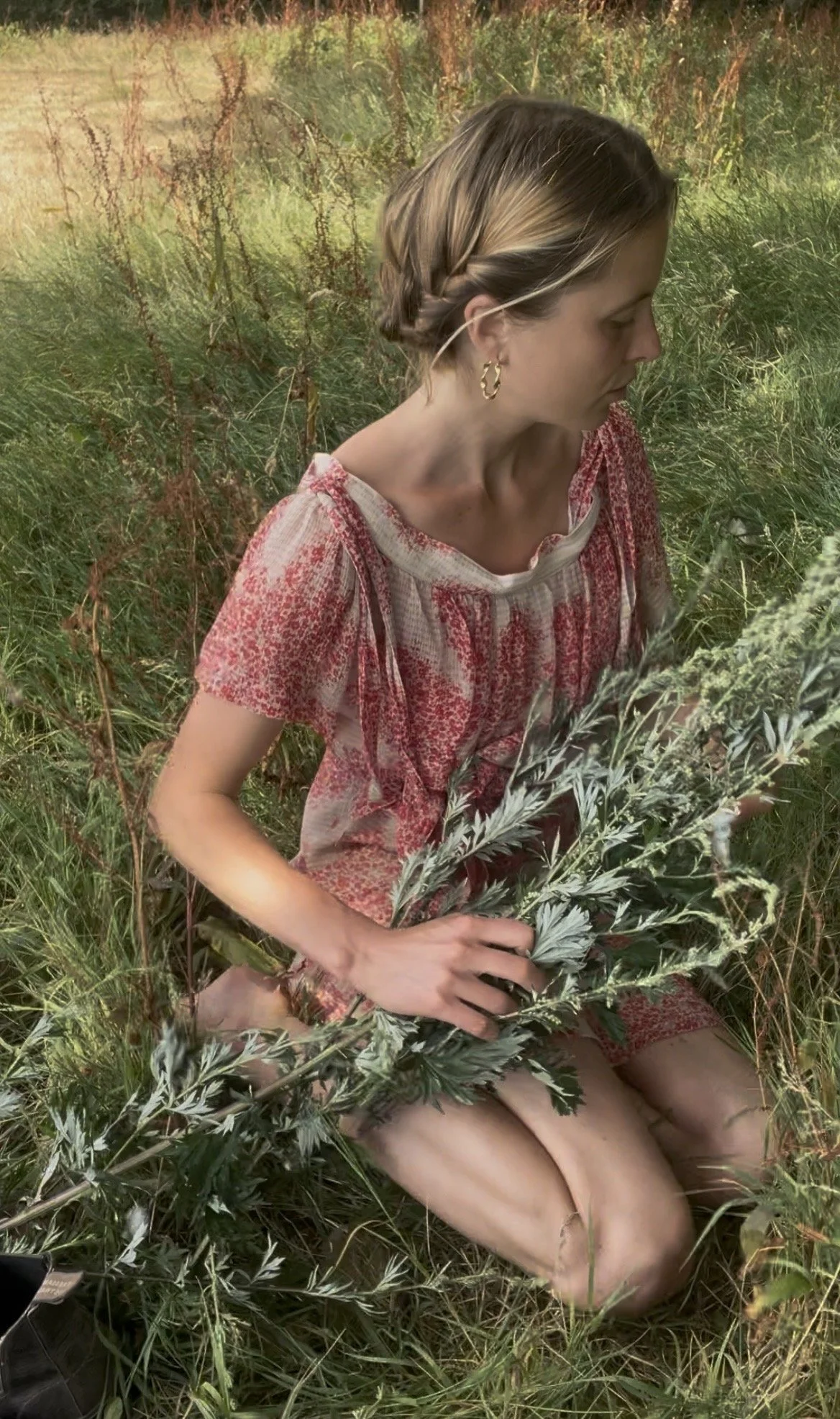
I can’t remember exactly how I learned of Mugwort. Encounters that come to mind are; her silvery stems lining the coastal path near to where I live, an ex-boyfriend teaching me how to weave her into smudge bundles, eating Mugwort roast potatoes (more on this later) one Summer long. But, it is likely I have known her for longer than my memories recollect.
Our connection to plants runs deep in our bones. We are reminded of them through whispers of folklore, cooking meals, old traditions and if open and receptive, through their callings from the lands we know as home.
Mugwort (Artemisia vulgaris) is one of the Nine Herbs of the Old English Nine Herbs Charm, where she is described as "the eldest of herbs". For thousands of years, our ancestors have worked with her to enhance dreams and regulate cycles. She is a powerful herb. A herb for the women, the wild women. Mugwort is as old as time.
B O T A N Y
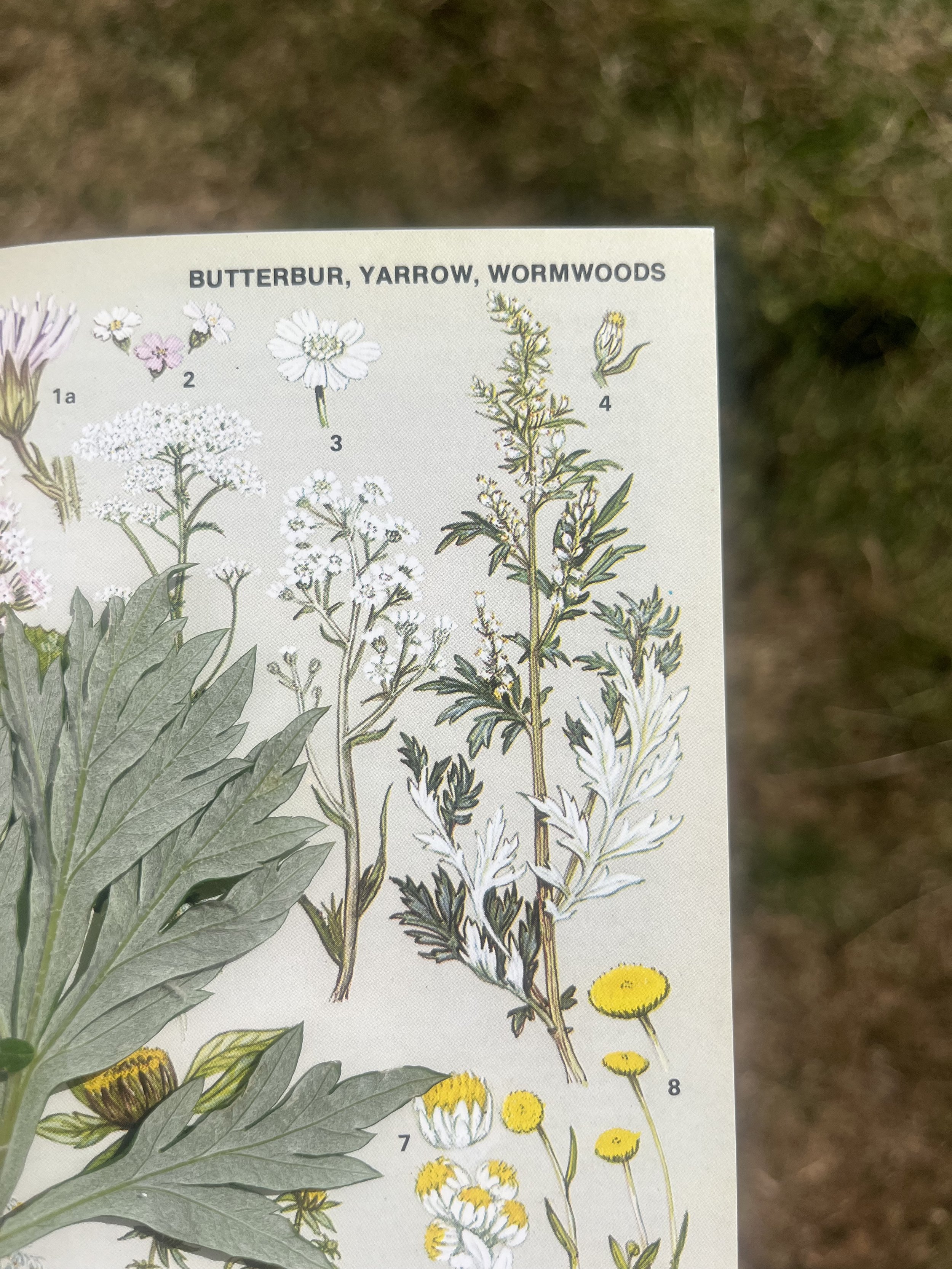
Mugwort, Artemesia vulgaris, is a perennial plant in the Asteraceae family (same as the Daisy). By mid-Summer, the angular stems can reach heights of 2 metres and small clusters of flowers begin to form. The colour of Mugwort from its stem to its leaves, is utterly unique. The stems are green-purple and the pinnate leaves a silvery-green with fuzzy undersides, attached in opposites by a thin, long petiole.
Mugwort reproduces rapidly by its horizontally branched rhizomes from which adventitious roots grow. The birds enjoy feasting on the seeds.
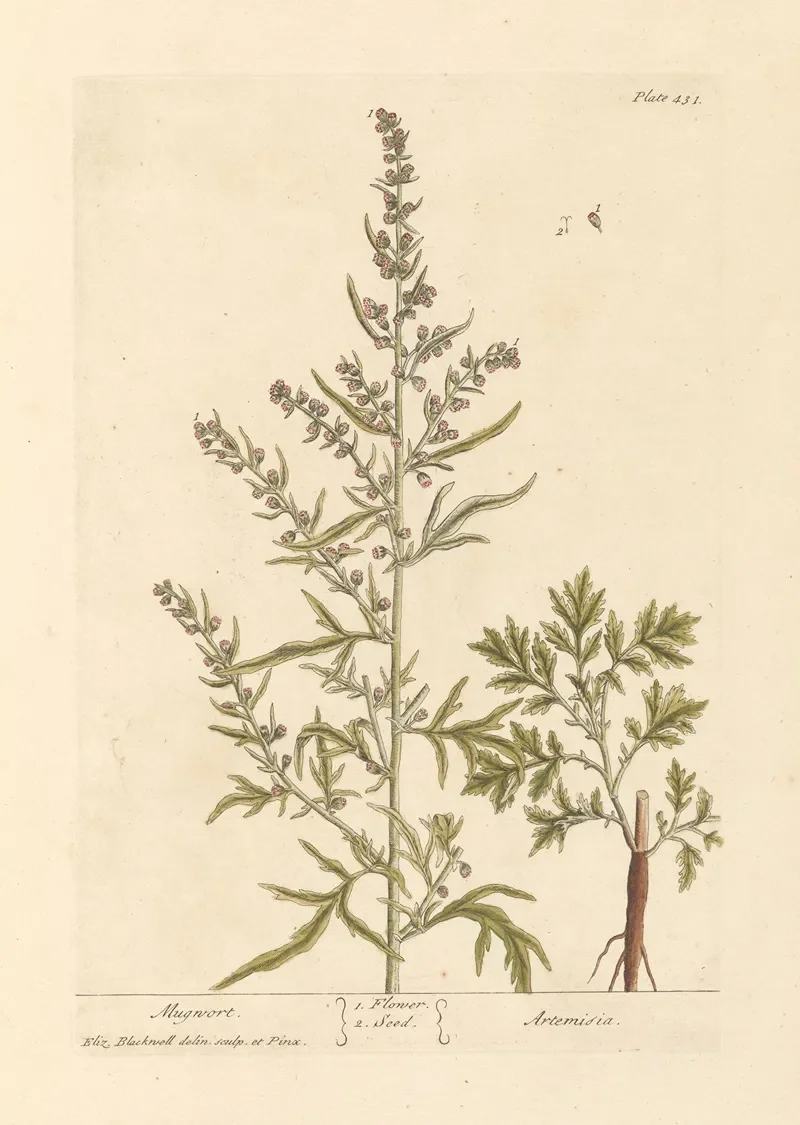
Elizabeth Blackwell, Mugwort, 1739
E T Y M O L O G Y
The common name, Mugwort, derives from the Old English, mugcwyrt, which literally means ‘midge wort’. A ‘midge’ is the popular name for a two-winged fly and used indiscriminately for many small insects. Whilst ‘wort’ is an old word used to refer to any plant, herb, vegetable or root (for example, St John’s Wort).
The 12th century abyss and mystic, Hildegard von Bingen, called Mugwort ‘biboz’. ‘Biboz’ comes from Middle High German and means to bump or stomp. The name would thus make sense, since Mugwort was pounded for use as a herb in cooking and medicine and was called ‘biboz’ or ‘bivuoz’ in German (now Beifuss). In Holland it is named similarly, Bijvoet.
F O L K L O R E
Mugwort was dedicated to the Hellenic Goddess, Artemis. Goddess of wild animals, lunar cycles, wilderness, the hunt, childbirth and protector of young girl. She is a powerful wild woman. She embodies both the protector and hunter, overseeing the balance of nature, safeguarding wildlife, and ensuring the health and growth of children, particularly girls. Ancient murals and frescos remain depicting Artemis as a youthful huntress carrying a bow and arrows, roaming forests and mountains accompanied by nymphs. The plant’s botanical genus, Artemisia, is widely thought to honour her. It is a fitting association, for both goddess and herb have long been linked to feminine wisdom, intuition and our relationship with the natural world.
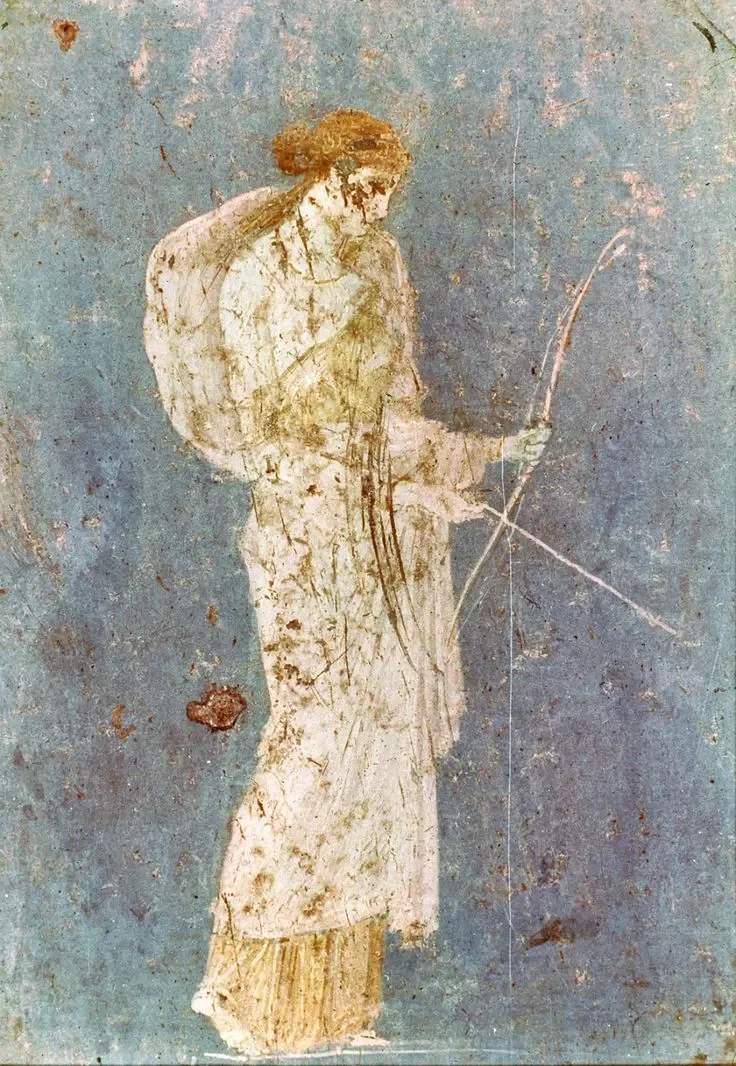
Artemis fresco, 1 AD–45 AD. Villa di Arianna, Stabiae - southwest of Pompeii Museo Archeologico Nazionale di Napoli
Artemis fresco, 1 AD–45 AD. Villa di Arianna, Stabiae - southwest of Pompeii Museo Archeologico Nazionale di Napoli
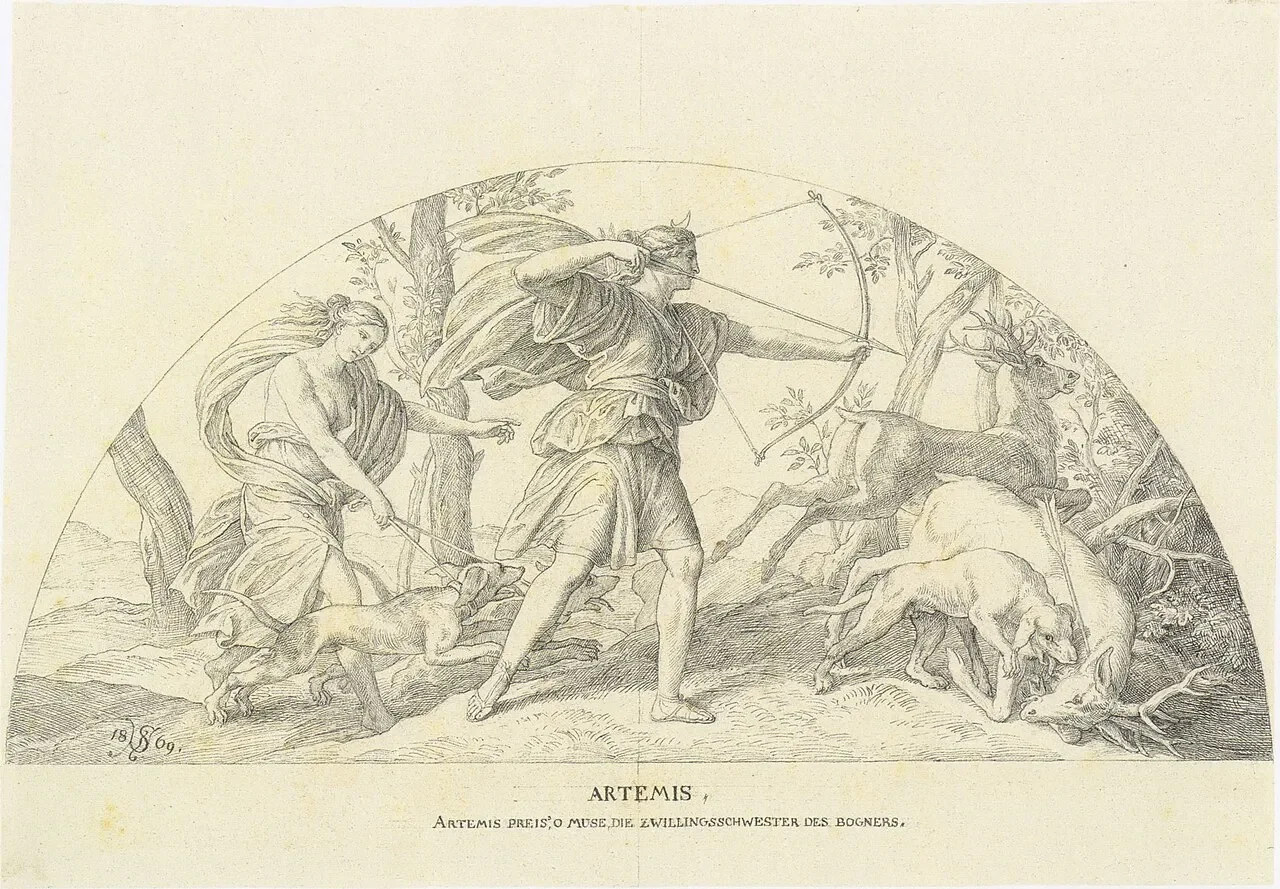
Artemis fresco design for the Homeric Hymns
During the medieval ages, Mugwort was used reverently in herbal medicine. In fact, it was considered such an important herb, it is included in the Nine Herbs Charm. The Nine Herb Charm is an Old English charm recorded in the tenth century and a part of the Anglo-Saxon medical compilation known as Lacnunga, which still survives in the manuscript Harley MS 585 today and can be found in the British Library. The charm personifies nine herbs: Plantain, Mugwort, Lamb’s Cress, Betony, Chamomile, Nettle, Crab-Apple, Chervil and Fennel.
Below is an extract from the Charm recounting Artemesia’s (Una’s) tenacious strength.
Remember, Mugwort,

what you brought to pass,

what you readied,

at Regenmeld.
You’re called Una, that most ancient plant.
You defeat three, you defeat thirty,
you defeat venom, you defeat air-illness;
you defeat the horror who stalks the landIf you read Hamnet by Maggie O’Farrell, this charm might be familiar to you. In the book, the wife of Shakespeare, Agnes Hathaway, is portrayed as a healer. Mugwort is repeatedly referred to, symbolic of her maternal devotion. If you have not read the book or seen the film, I do recommend!
M E D I C I N E
Due to the bitter and carminative actions, Mugwort is a natural digestive stimulant and can relieve bloating, indigestion, constipation and regulate or stimulate appetite. It’s bitter compounds such as sesquiterpene lactones, promote liver function and bile flow, which aids overall digestive efficiency. Taking a few drops of Mugwort tincture before a meal can help those who regularly experience ‘heaviness’ or discomfort after meals.
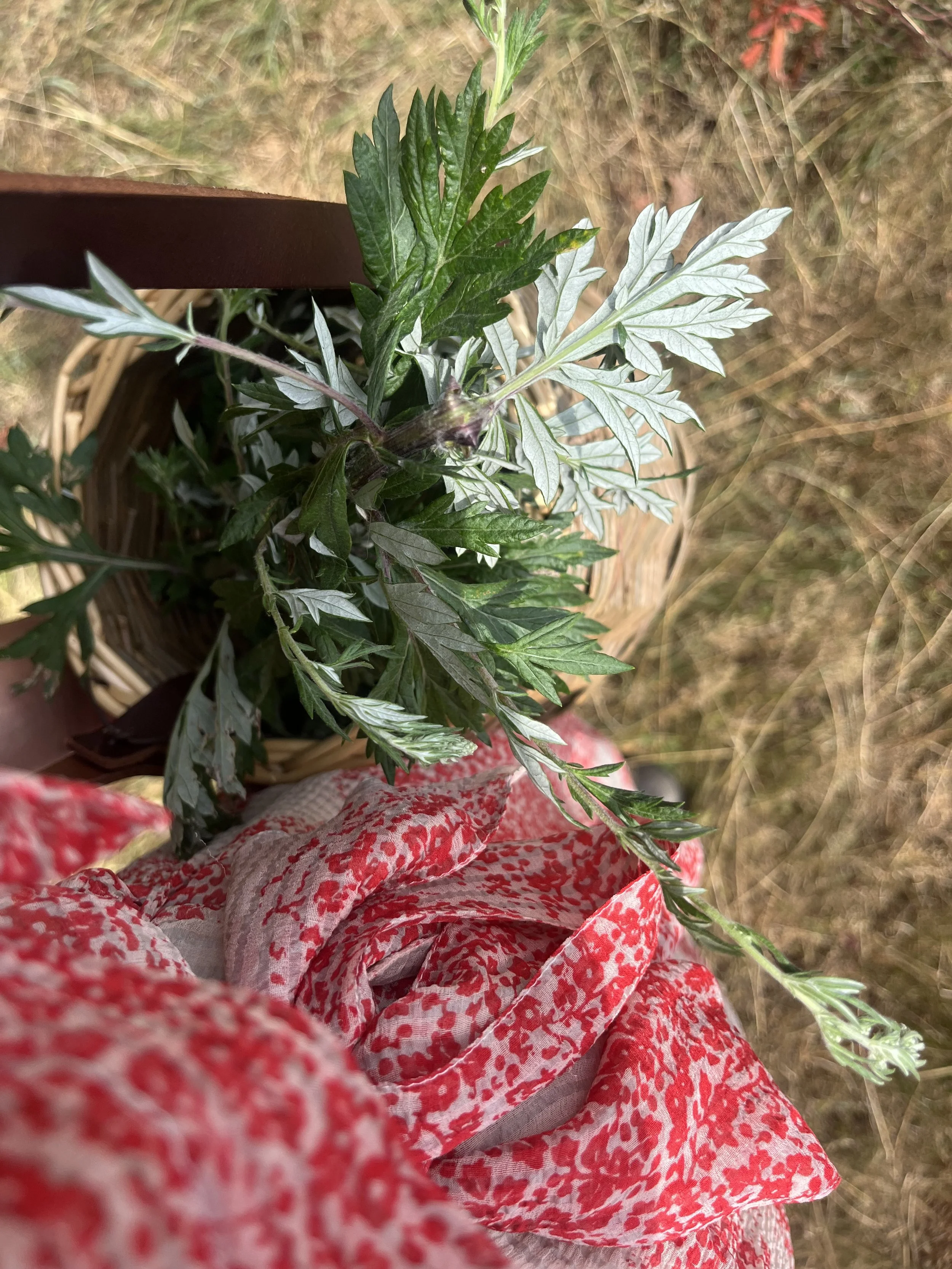
Mugwort is renowned to be a herb for dreamers. The plant has mild sedative and calming properties that can reduce stress and anxiety. This in turn can induce vivid and lucid dreams, connecting you with your subconscious. Either burning dried Mugwort and using as an incence or smudge bundle or a Mugwort tea is the best way to experience these benefits. Sailors used to smoke the dried herb and the plant thus got its name, ‘Sailor’s Tobacco’.
As mentioned, Mugwort is a powerful herb for women. A Mugwort tea or tincture is a brilliant reproductive tonic, regulating menstrual flow and cycles. This is due to its emmenagogue qualities, stimulating blood flow to the uterus and pelvic area. The antispasmodic effects of Mugwort can alleviate painful periods. Sadly, due to artificial light, an overload of stimuli and unseasonal ways of living, many women no longer bleed with the moon cycles today. However, in the past, starting your bleed on either the full or new moon would have been the norm for most women. There are many advantages of timing your period with the lunar cycles, but that is a vast topic which I won’t go into on this post, however, I will say that Mugwort can help re-sync your menstrual cycle with the moon and bring on delayed periods.
For the 16th century German father of botany, Jacob Theodorus, women using Mugwort to connect to their innate power was a whole lot of nonsense, he writes, ‘women still gather this herb for their bunches of herbs together with other herbs and use it for practising strange idolatries and all sorts of madness.’ But, I guess he had never had the privilege of experiencing the raw wildness of being a woman.
Energetics: warm, dry, bitter, pungent
Please note, I am not a medical herbalist and my words should not be used to treat serious illness. Please consult a medical herbalist if you would like to work with herbs to help treat symptoms.
R E C I P E
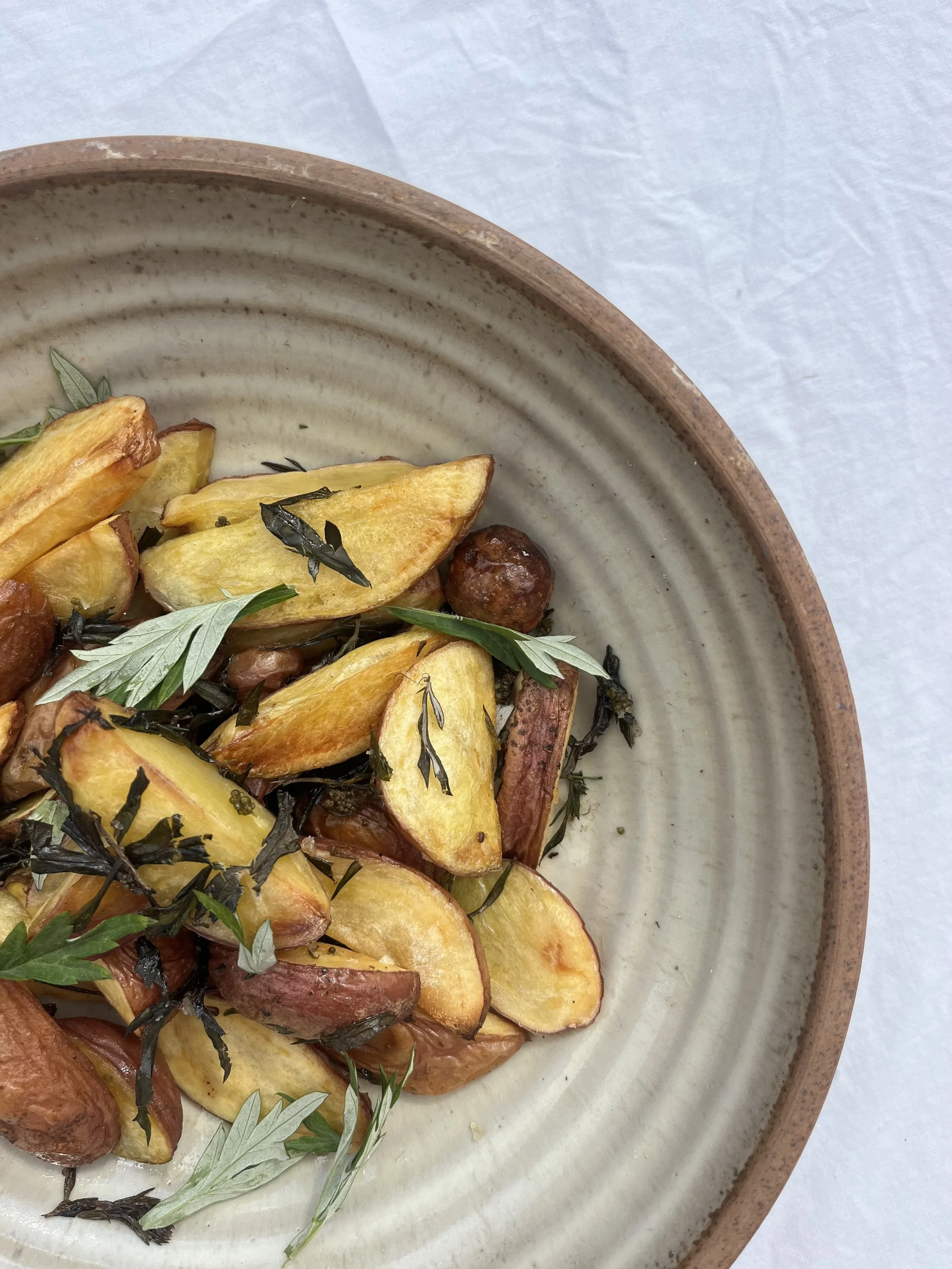
One Summer a few years ago, for some reason or other I felt compelled to sprinkle Mugwort over my potatoes for most meals. Perhaps I was subconsciously connecting to my own wild woman. Mugwort is wonderfully aromatic and has a flavour not dissimilar to Rosemary. Whilst I advise you to not be too heavy handed with the Mugwort or else you might be having the wildest of dreams each night, I do recommend you try a little. You will need to forage the Mugwort yourself as there isn’t the slightest chance you’ll find it in a supermarket or even a market, but, I hope after this post, you might be able to identify her in your landscape (if she grows near you that is).
At this time of year we are digging up lovely golden potatoes from the earth daily and so they are a celebrated feature at most dinners. Mugwort roast potatoes pair so well with fresh fennel and lentil salads, beetroot hummus, grilled courgettes (or zuchinni to those reading from the other side of the world - hello! or any fresh Summer goodness!
Mugwort Roast Potatoes
Ingredients -
as many small potatoes as you desire sliced in to lengths
generous glugs of olive oil
flaky sea salt
Mugwort, fresh or dried (as much as you would use of Rosemary), chopped c=finely
Method -
Pre-heat your oven to 250 degrees celcius
Simply fill a large tray with the sliced potatoes, drizzle over the olive oil, salt and Mugwort, and use your hands to ensure all is well and evenly coated
Roast for ~ 30 minutes or until golden and crispy
Serve with recommended sides (above) or let me know in the comments what you like to serve your roast potatoes with!
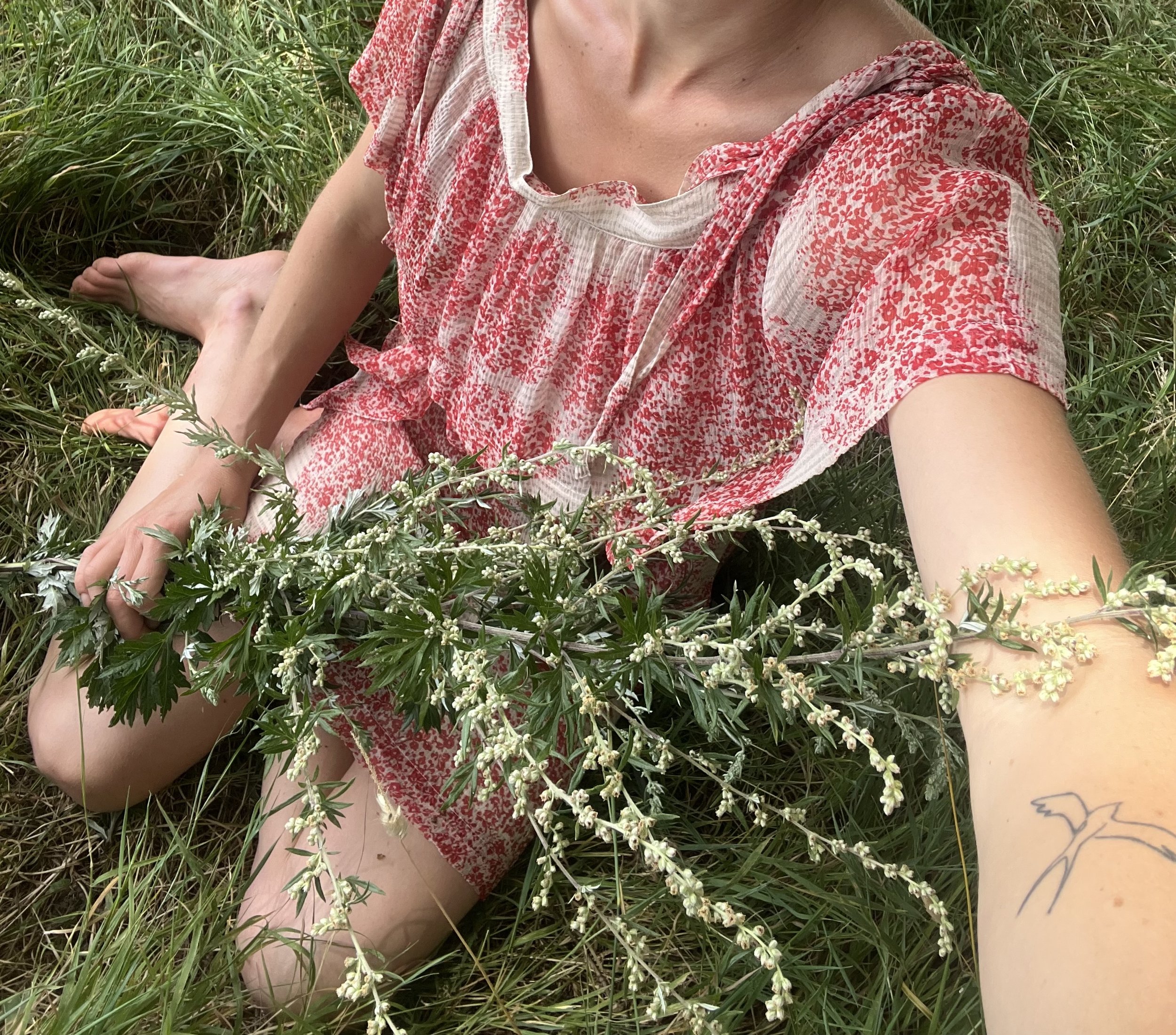
As always, thank you for sharing in my delight for plants. I hope you enjoyed learning about Mugwort. I am wishing you all wonderfully evocative dreams and if you identify as a woman, your wildness within!
Until next time,
Isobel x