Rose
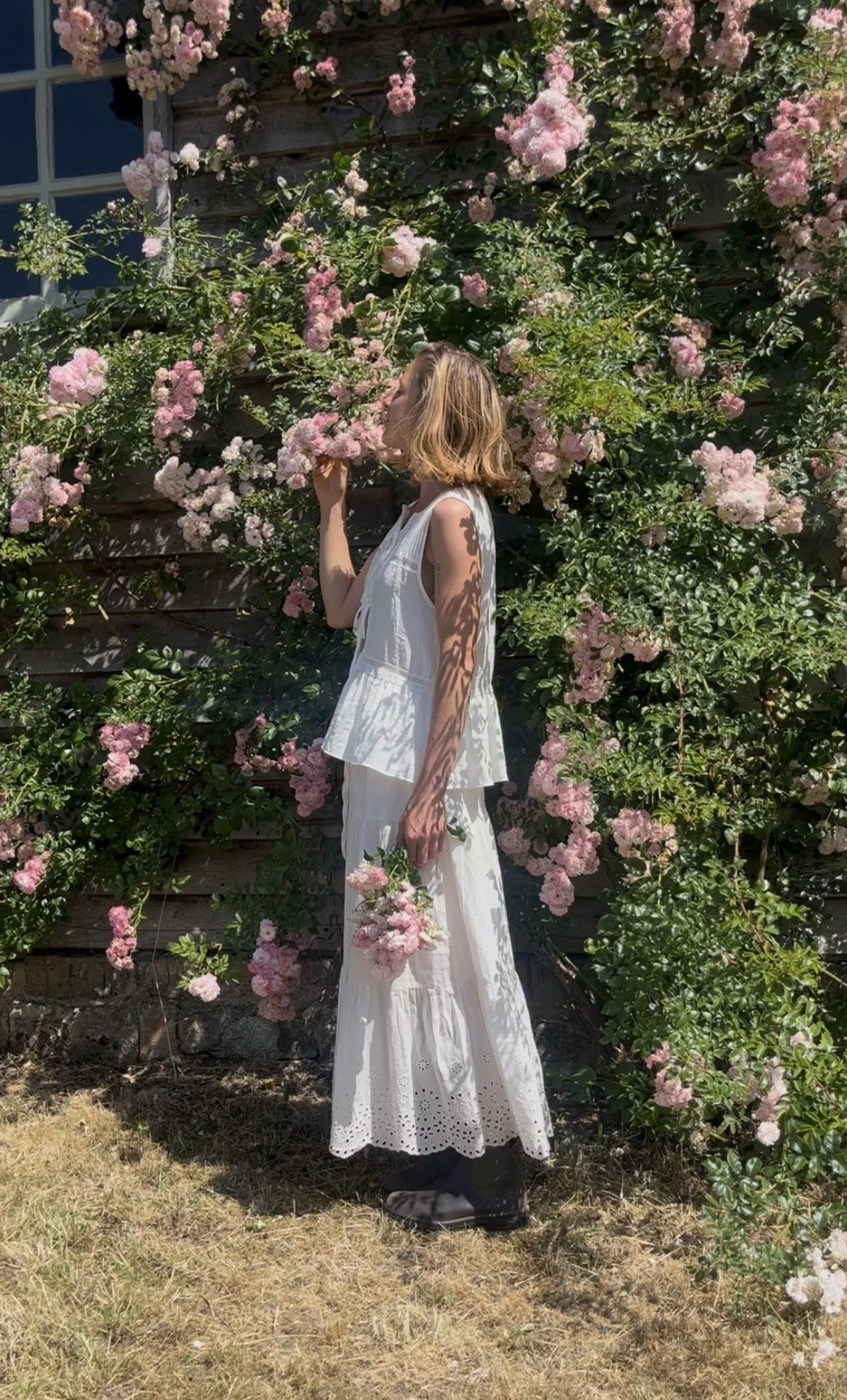
I actually surprised myself by choosing to write about Rose for this week’s plant. I am usually drawn to flowers that are more understated, wild and lesser known. But, plants speak to us and the one’s calling often offer exactly what we need in the given moment and so on reflection, of course it would make complete sense that I felt a pull to write about the Rose this week - a plant for healing hearts, awakening souls and those experiencing joy and sorrow in equal measures.
Perhaps that says a little more about my current state of being than I had intended.
Other than (over)sharing with you, Rose really needs no introduction. She is perhaps one of the most celebrated plants in the world and deservedly so. She has inspired Greek mythology, been exchanged between lovers and warriors alike, yielded one of the most precious oils in perfumery and herbal medicine and stolen the hearts of gardeners, artists and poets.
B O T A N Y
I find it fascinating that something so beautiful can, at the same time, be so fierce. Rose thorns are cruel. Any gardener will tell you that much. I have had fingers shredded raw and coat sleeves torn to tatters many a time whilst balanced atop a ladder on a cold Winter's day, attempting to tame a rambling rose. Yet when June arrives and the first flowers unfurl, a profusion of impossibly beautiful petals somehow makes you forget there was ever a fight. Is this what they call a toxic relationship?
Perhaps this contradiction is part of the Rose's enduring appeal. Those formidable, thorned stems (or, more accurately, prickles) protect some of the most exquisite flowers in the plant kingdom. In Winter, the framework stands bare, save for the ruby-red hips left for hungry birds or gathered by greedy foragers (me) for syrup and jam. By early summer, however, those same stems become clothed in blooms of a vast array of shades, shapes, scents and forms. Proof that softness and strength can exist side-by-side.
Gosh, I have rather stumped myself here. There is simply too much to say. Wild roses have graced the Earth for millions of years, whilst centuries of careful cultivation have given rise to the extraordinary diversity we know today. From ancient species roses and old garden roses to the modern hybrids adorning our gardens, each has such character and story.
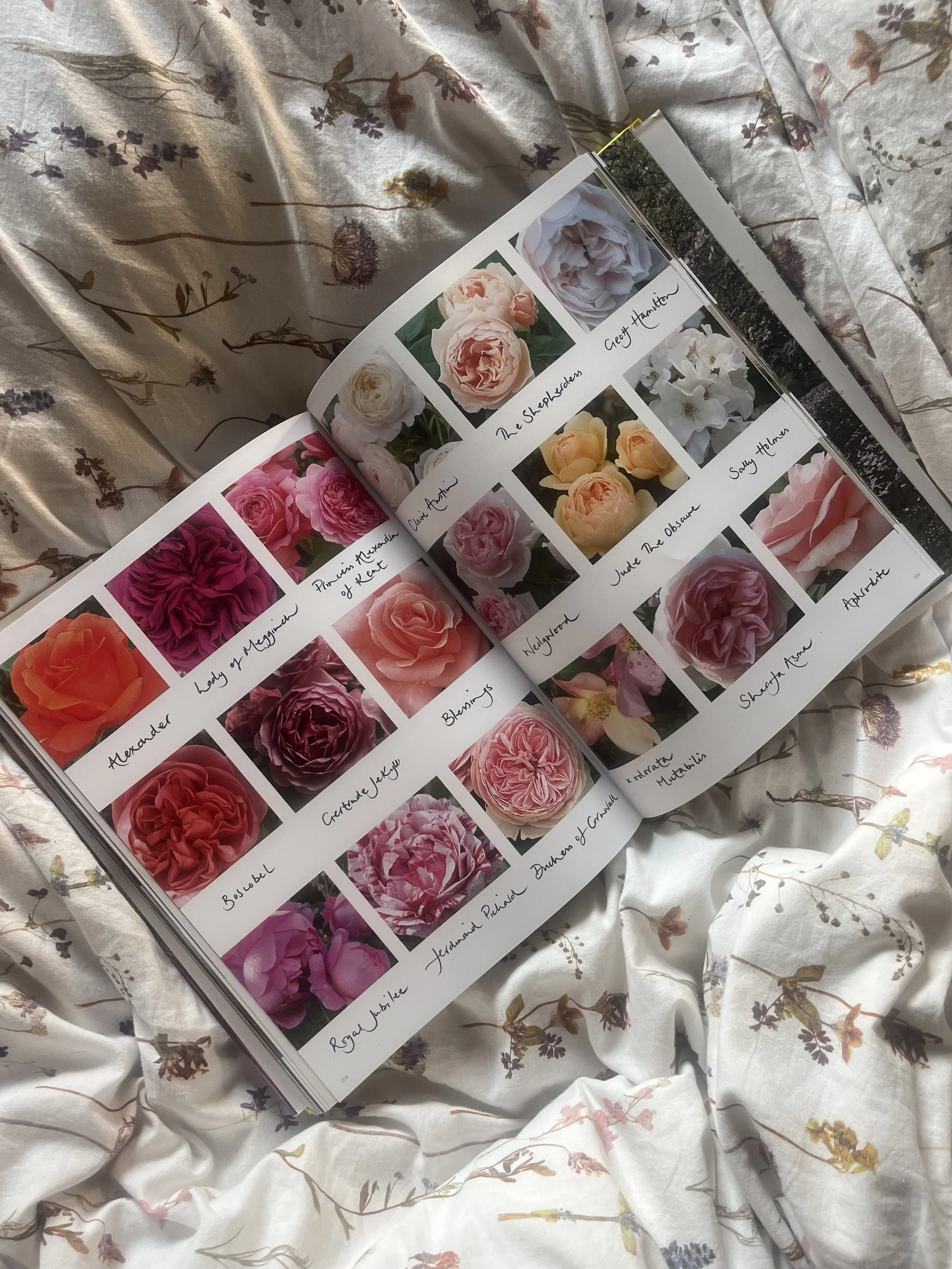
Rather than attempting to untangle the complex world of Rose taxonomy, I thought it might be more enjoyable to simply share a few of my favourite varieties below.
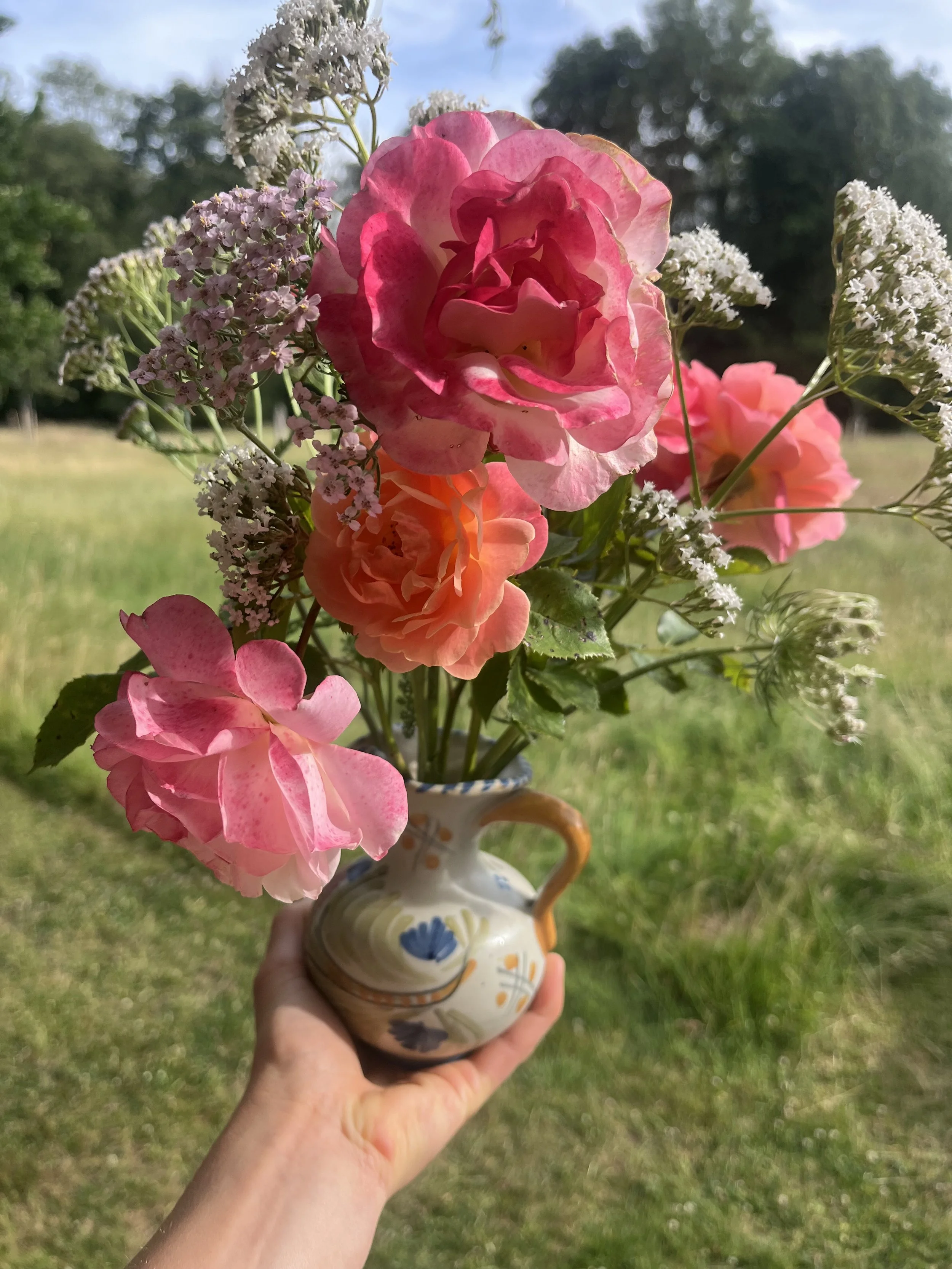
Rosa ‘The Fairy’ - a dainty shrub Rose from David Austin
Rosa x odorata ‘Mutabilis’ - this China Rose has single blooms that chnage from yellow through to pink and crimson
Rosa ‘Celeste’ - I first learnt of this Rose whilst working at Sissinghurst Garden and it was my favourite of their collection. A classic Rose, beautiful pink set against glaucus-grey leaves
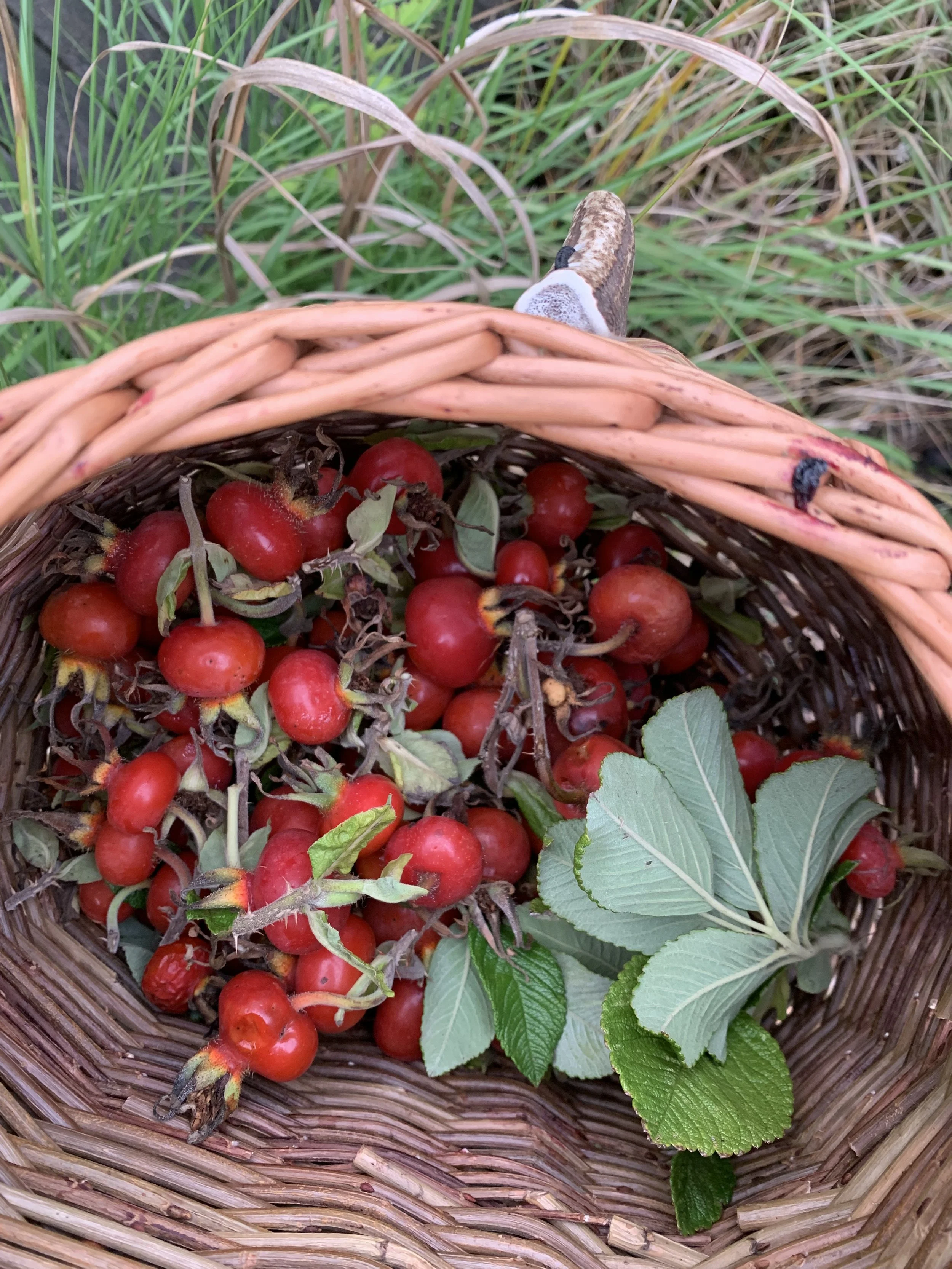
Rosa canina - the classic wild dog Rose, she is not the most fragrant, nor the most blousy of blooms, but she is wild and pretty and offers a bounty of hips in Autumn
Rosa ‘Gertrude Jekyll’ - a truly wonderful bush Rose with layers of fragrant petals. A deserved favourite for many.

F O L K L O R E
Rose’s are well known to symbolise love. I am going to tell you a Greek myth of how the red rose came to be.
Aphrodite, Adonis and the birth of the Red Rose
Aphrodite, the Goddess of love, sensuality and desire was out cutting white roses in the garden when she heard the cries of her lover Adonis. He had been out hunting wild Boar, fearsome creatures and when provoked can cause great harm.
Thinking of nothing but reaching him, she ran barefoot through a thicket of white roses, their sharp thorns tearing at her skin. She scarcely noticed the wounds - a minor injury compared to what she was about to witness of Adonis. His groin has been torn and blood poured from his arteries. No amount of kissing his face nor declarations of her love could save him. He passed in her arms.
As she fled weeping back through the garden, she saw the white rose on which she had fallen had turned red from her blood. These were the first red roses on Earth. Aphrodite declared, “from this day on, red roses will symbolize passionate love and white roses the purity of true love.”
M E D I C I N E
Rose is a beloved ancestor of our herbal practise. The flowers offer sweet medicine that soothes the nervous system, assists with memory and promotes clarity of mind and spirit.
Rose is essential for imbalances, especially those that arise from excess inflammation. Due to its cooling qualities, Rose alleviates inflamed, fiery symptoms such as gastric ulcers, autoimmune conditions, acne and an overworked liver.
Rose is incredibly probiotic, making it a powerful digestive aid. If you have recently taken antibiotics or been unwell, Rose can help rebuild gut flora. Adding to this, Rose improves circulation and promotes healthy blood flow, helping kidneys and the lymph to process toxins out of the body.
Rose is an opener. Being a mild aphrodisiac, Rose can open the heart and body to healing experiences with oneself and others. Since Rose also works on the nervous system, it can simultaneously help relax the body into a place of connected intimacy.
Rosehips are the richest natural sources of vitamin C found in the British countryside, alongside a wealth of antioxidants, flavonoids and carotenoids. For generations, they have been gathered to support the immune system during the colder months, often brewed into syrups and teas. A Rosehip oil is warming and helps with arthritic joints.
Rose is a herb for those that have lost their spark of desire. If you feel emotionally and physically depleted, so much so that you have no desire to explore your creative potential, Rose is your ally. In the words of herbalist and writer Alexis Cunningfolk, “ Rose teaches us to use both our thorns and our petals to set up boundaries and supportive spaces to express how we really feel. Working with Rose helps folks to reconnect to their wildness, their fierceness, and their determination to know and name their heart’s desires… the profound gift of Rose folks is the ability to name desire, honour it in others, and shine like a fiery, welcoming, and protective light wherever they go.”
Energetics: Cooling, drying, astringent
R E C I P E
Sometimes, the most simple of things are the best. I don't think much can rival a jar of Rose-infused oil. The process of making it is every bit as sensual as the oil itself.
Rose Petal Oil:
Simply fill a jar full of Rose petals, fresh or dried. Make sure they are fragrant, garden Roses are ideal and free from chemicals. You can gently ‘bruise’ the fresh petals using a spoon to help release the oils. Pour over a good-quality oil such as almond, jojoba, sunflower or olive. Leave to infuse for a couple of weeks. Strain into a dark glass bottle and store out of sunlight.
Uses: as a facial oil, on tired or inflamed skin or as a luxurious drizzle on desserts or certain savoury dishes
A R T
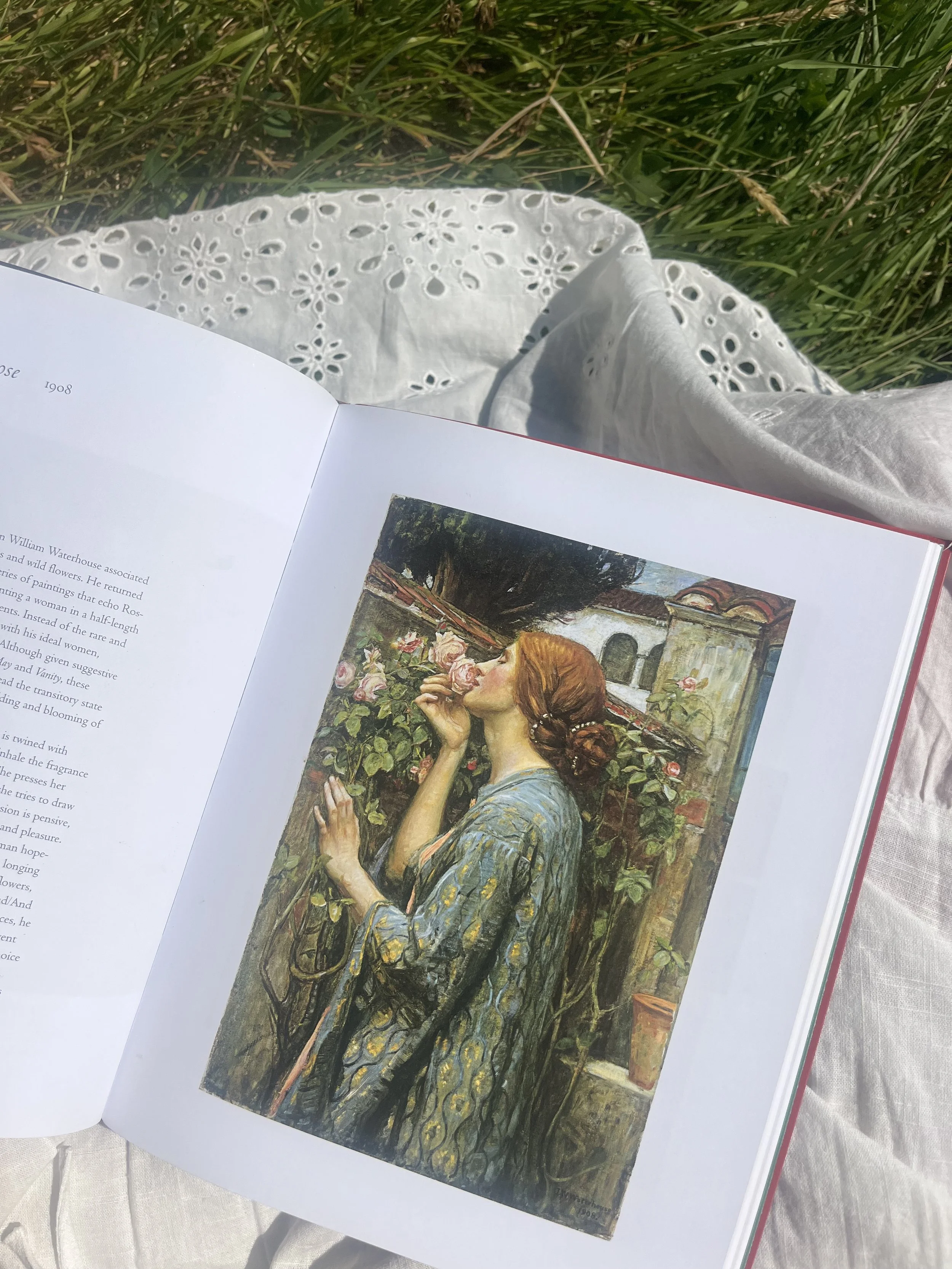
In his paintings, John William Waterhouse uses the Rose to emphasize the transitory state of young womanhood that parallels the beauty of the budding and blooming of the flower of love.
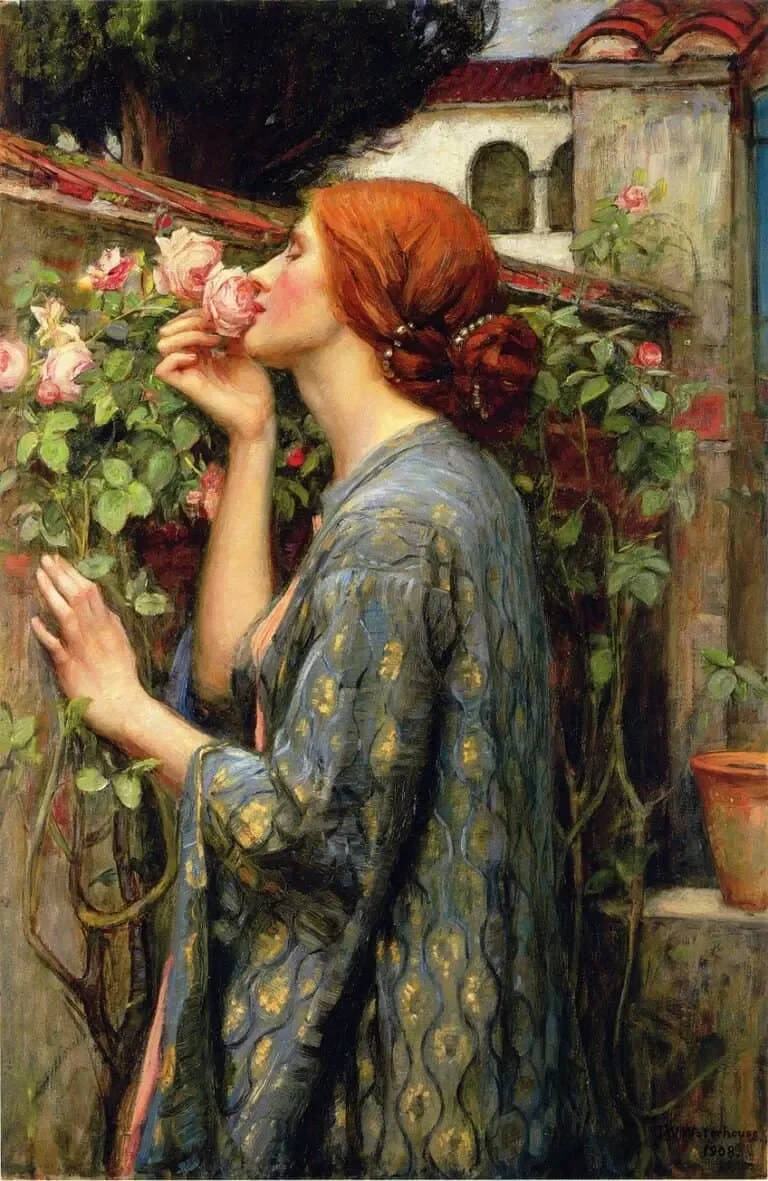
John William Waterhouse, The Soul of the Rose, 1908